
How to Get Your Art Into a Gallery
A practical, evergreen guide to approaching galleries professionally — covering preparation, presentation, submissions, professionalism and long-term relationships.
15 min read
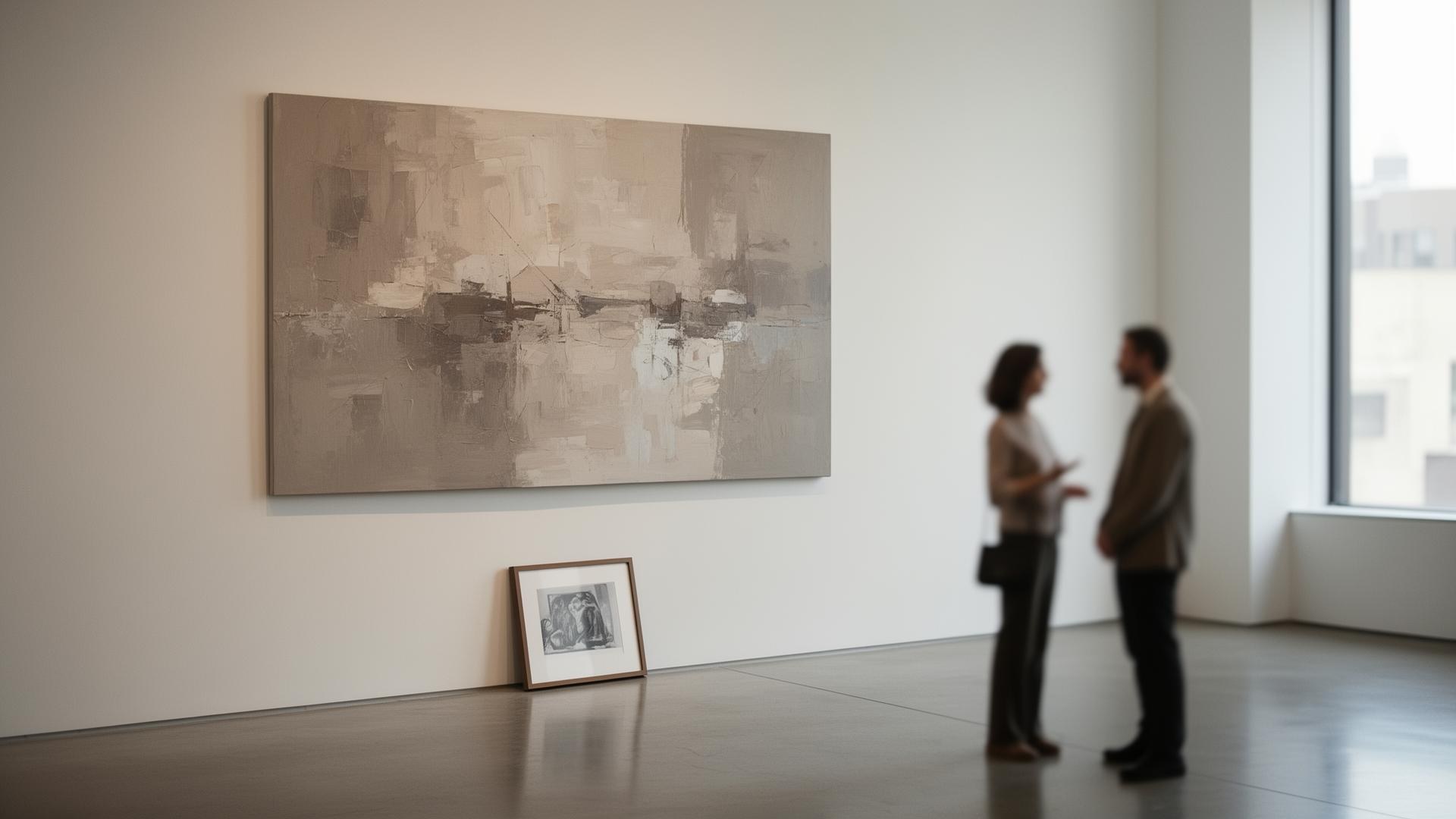
Getting your art into a gallery is a common goal for practising artists, and one of the most misunderstood. There is no single application process, no universal route and no guaranteed timeline. There are, however, professional standards that galleries tend to expect, and practical steps that can improve how your work is received.
This guide covers the journey as a whole: what gallery readiness actually means, how to prepare your work and materials, how to research and approach suitable galleries, what happens after a positive response, and how gallery relationships develop over time. Where a topic needs deeper treatment — preparing a portfolio, writing a statement, consignment terms — it points to a dedicated guide rather than repeating it here.
What Gallery Readiness Means
Before any approach, it is worth asking a harder question: is the work, and the practice around it, ready to be shown? Galleries assess more than individual pieces. They look for a practice they can understand, present and stand behind.
Readiness is usually visible in a few areas:
A coherent body of work. A recognisable practice, not a collection of unrelated experiments. The number of works depends on the work and the gallery, but you need enough resolved pieces to demonstrate a coherent, sustained practice — a consistent visual language that could be presented across a wall or a room.
Professional documentation. Every work photographed to a consistent standard — square-on, well-lit, colour-accurate, free of glare and distortion. Poor photography can cause strong work to be dismissed before it is properly seen. For the full standards and setup, see How to Photograph Artwork.
Supporting texts. A short, specific artist statement and a factual third-person biography. These do not need to be long; they need to be accurate and genuinely about your work. See How to Write an Artist Statement and Artist CV and Biography.
A portfolio. A clear, well-organised document or website presenting your work, statement, biography and contact details. See How to Create a Professional Artist Portfolio.
Reliable records. Accurate titles, dates, dimensions, materials, prices and availability for every finished work. Clear, reliable records make a gallery's job easier and reflect on how you handle your practice.
If any of these are missing or weak, the most productive use of your time is to strengthen them before approaching anyone. A properly prepared approach is usually more effective than one made in haste — first impressions with galleries are difficult to redo.
How Galleries Find Artists
Galleries discover artists through a wider range of channels than most people assume. Understanding these routes helps you place yourself where galleries are already looking.
Open submissions. Some galleries run formal submission windows, often once or twice a year, reviewed by gallery staff or invited panels. They are competitive but transparent, and can be a useful entry point for emerging artists.
Curated invitations. Many group exhibitions are curated by invitation, built from artists the curator already follows, has met at events or has been introduced to by trusted contacts. You cannot apply for these directly, but you can become visible enough to be considered.
Recommendations. Galleries trust the opinion of artists they already work with, as well as collectors, critics and other curators. A quiet recommendation from a respected figure can carry more weight than any cold email.
Open calls. Independent open calls, prize exhibitions and themed shows run by galleries, museums and arts organisations are a useful way to build exhibition history and be seen by selectors. See Open Calls for Artists for guidance on preparing strong submissions.
Art fairs and graduate shows. Galleries scout at fairs, degree shows and graduate exhibitions. Being included in a respected group show, even a modest one, increases the chance of being noticed.
Online presence. A consistent, professional website or social media presence with strong images of finished work is part of how you become findable. Galleries do look.
Understanding Different Types of Galleries
The word "gallery" covers very different organisations with different priorities. Knowing which type you are approaching changes everything about how you approach them.
Commercial galleries sell work and take a commission. They invest in artists they believe in and may seek a long-term relationship. Their selection process is rigorous because they commit time, wall space and marketing budget to each artist.
Artist-led galleries are run by artists, often as project spaces or membership-based organisations. They tend to be more experimental, are often accessible to emerging artists and are less focused on sales. They are excellent for building exhibition history.
Cooperative galleries are jointly run and funded by member artists, who usually exhibit on a rotating basis and share running costs. They offer regular exhibition opportunities but require genuine commitment and contribution.
Public and regional galleries — council-funded spaces, museums and arts centres — often have mixed programmes, strong community engagement and real interest in artists connected to their region. They are frequently overlooked but offer serious exhibition opportunities.
Each type has its own expectations about submissions, pricing and exclusivity. Research the specific organisation, not the category.
Researching Suitable Galleries
Sending the same submission to fifty galleries rarely works. Research is the difference between a professional approach and a hopeful one.
Style fit. Look at the work the gallery currently shows. Does your practice sit naturally within their programme? Fit matters alongside quality — a gallery showing reductive abstraction is unlikely to take on figurative narrative painting, however accomplished.
Price point fit. Galleries operate at particular price levels because their collectors do. Look at the prices of artists they currently show. If your work sits far outside that range, the relationship will struggle.
Audience fit. Consider who visits the gallery, who buys from it and who writes about it. A gallery whose audience aligns with your work will present it more meaningfully.
Geographic fit. Some galleries focus on artists from their region; others draw nationally or internationally. Regional connection can be a genuine advantage.
A short, well-researched shortlist is more useful than a long, unresearched one. Keep notes as you go — which galleries you have researched, what their submission process is, and why you think your work fits. A simple spreadsheet is entirely adequate for this.
How to Approach a Gallery and Submit Your Work
The most important rule is to follow each gallery's own submission process. Some accept direct email submissions, some use online forms, and others do not accept unsolicited work at all. Check the gallery's current guidelines before making contact, and prepare exactly the material requested.
Email submissions. Where email is invited, keep the message short and professional. Introduce yourself in a sentence or two, explain briefly why you are approaching this gallery specifically, attach or link to a small selection of images, and link to your full portfolio or website. Avoid long biographical narratives and large attachments.
Submission forms. Many galleries use structured forms. Follow the instructions exactly, provide what is asked for in the format requested, and do not send additional material outside the form.
In person. Walking into a gallery with a folder of work is rarely welcome. Gallery staff are working and are not in a position to assess work on the spot. Visiting exhibitions, attending openings and engaging quietly with the gallery's programme over time is far more useful — it is how familiarity, and eventually relationships, begin.
A professional approach is patient, considered and respectful of the gallery's time.
What Galleries Assess
Beyond the quality of the work itself, galleries weigh several practical factors.
Consistency. A clear, recognisable practice the gallery can present coherently to its audience.
Professionalism. Reliable communication, well-prepared materials, properly documented work and an understanding of how galleries operate.
Reliability. Work delivered on time, in good condition, properly framed or finished, with accurate records and reasonable expectations.
Audience potential. Realistic evidence that the work can find its readers — not fame, but a practice that can hold attention over time.
Galleries are not only assessing the work in front of them. They are forming a view of what working with you would be like over a number of years.
Common Mistakes
Submissions sometimes fail for a few common reasons.
Mass emailing. Identical generic submissions sent to many galleries at once. They are recognisable and usually ignored.
Ignoring guidelines. Sending material the gallery did not ask for, in the wrong format or outside its stated submission window. This signals carelessness before the work is even seen.
Unfinished portfolios. Placeholder text, missing dates, inconsistent image sizes, low-resolution photographs or broken links. A portfolio is the first impression of how you handle your practice.
Poor photography. Phone snapshots taken at angles, in poor light, with visible glare or distortion. Even strong work suffers in poor reproduction.
Unrealistic expectations. Expecting an immediate response, a guaranteed exhibition or representation after a single message. Gallery relationships develop slowly and rarely on the artist's preferred timeline.
Avoiding these mistakes does not guarantee acceptance. It does give your work the chance to be properly considered.
What Happens After a Positive Response?
Positive responses are usually quiet, often cautious, and rarely immediate offers of representation. A few stages commonly follow.
Initial discussions. A studio visit, a meeting at the gallery or further correspondence. This is an exchange, not an interview: the gallery is learning about your practice, and you are learning how they work.
Trial exhibitions. Many galleries begin with a group show, a small project-space exhibition or a single-work inclusion. This lets both sides test the relationship before any larger commitment.
Consignment arrangements. Most gallery sales operate on consignment, where the gallery holds work and takes a commission on any sale. The terms deserve careful attention before you agree to them — see Gallery Consignment for Artists for a detailed treatment.
Representation. Formal representation is rarely the starting point. It usually develops after a gallery has worked with an artist through exhibitions or consignment and seen that the relationship works commercially and professionally. It is a longer-term commitment in which the gallery actively promotes and sells the artist's work, sometimes with agreed geographical or other exclusivity.
Evaluating offers. Whether the opportunity is a fee-charging exhibition, consignment arrangement or representation offer, understand the actual costs, commission, exclusivity and your responsibilities before agreeing. Consequential agreements should be reviewed with appropriate professional advice. For consignment terms, see Gallery Consignment for Artists.
Treat the early stages with the same care as the initial approach. How you conduct yourself in the first months often determines whether the relationship continues.
Studio Visits
A studio visit is one of the most positive signals a gallery can give. It means they want to see the work in person, understand how it is made and form a sense of how you work. Treat it as a working meeting rather than a performance.
Tidy the studio enough that work can be seen clearly, but not so much that it looks staged. Have a considered selection of finished work available, plus a few works in progress if they are genuinely interesting. Be ready to talk about your practice clearly and briefly — what the work is about, how it has developed, what you are working towards — and then let the work do most of the talking.
Have practical information to hand: dimensions, materials, dates, prices, edition details where relevant, and a clear sense of what is available and what is committed elsewhere.
Pricing, Editions and Records
Galleries expect clear, consistent pricing across your work and across the venues you show in. Inconsistent pricing — different numbers for different audiences, or sudden unexplained increases — undermines trust and makes the gallery's job harder. Work out a coherent structure based on size, medium and career stage, and hold to it; for the underlying method, see How to Price Your Art.
For editioned work, keep accurate records of edition size, numbering, dates, prints sold and remaining availability. Galleries are understandably cautious about editioned work where the records are unclear, because the risk to their collectors is real. A well-kept archive is part of being a professional artist — see Artwork Archive: Database and Record System for a working setup.
Working with More Than One Gallery
Early on, most artists work with several galleries informally — a project space here, a group show there, an open submission elsewhere. This is normal. Once a representation conversation begins, the situation changes: galleries offering formal representation often expect some degree of exclusivity, commonly by region. Approaching multiple galleries in the same city without disclosure can damage relationships permanently.
Be transparent. If you are already showing with another gallery in the same area, say so. If you are in discussions with more than one, be honest about it. Galleries respect openness, and they remember the artists who handled difficult conversations well.
Building Long-Term Gallery Relationships
The artists who sustain careers with galleries tend to share a few quiet habits. They communicate clearly and reliably. They deliver work on time and in good condition. They respond promptly to enquiries. They keep accurate records of editions, prices and provenance. They turn up to openings, support other artists on the programme and represent the gallery well in public.
They are also realistic about commercial pressures. Galleries are businesses; exhibitions cost money to mount; sales fluctuate. A patient, professional artist who understands the gallery's position is easier to work with than one who treats every quiet period as a crisis.
One caution is worth stating plainly. Relationships with galleries and curators built purely as a means to an end tend to be transparent, and they rarely last. The relationships that endure are the genuine ones — built because you are interested in the programme, the artists and the conversation, not because you are counting down to an ask. Engage because you mean it.
The strongest gallery relationships are partnerships. Both sides invest, both sides take risk, and both sides benefit when the work finds its audience. This is built over years, not seasons.
Rejection and What It Actually Means
Many submissions are not accepted, and this is not usually a judgement on the quality of the work. Galleries decline for many reasons: the programme is full, the work does not fit the current direction, the price point is wrong for their collectors, they are not taking on new artists at all, or they simply lack the capacity to consider submissions properly.
A rejection is not a verdict. It is one gallery's response on one occasion. Treat it as information, not a final assessment. If you receive a personal rejection with specific feedback, treat it as a small gift — a few sentences of considered comment are worth careful attention, even when they are difficult to read.
Preparing Gallery and Exhibition Materials from Your Artwork Records
A gallery relationship involves more than sending a portfolio. Once work is being considered for an exhibition, artists may be asked to supply accurate artwork details, images, dimensions, materials, prices, statements, labels and other documentation — often to a deadline.
Keeping this information in a structured record for each artwork makes that process considerably easier, whatever system you use. A disciplined paper file and a well-kept spreadsheet are entirely workable approaches; the essential thing is that each artwork has a single, reliable record containing its title, date, medium, dimensions, price, availability, images and exhibition history, so that material for a gallery can be drawn from it rather than reassembled from emails and folders each time.
Vault Canvas is designed around this principle. Once an artwork and its supporting information are recorded, the same record can help prepare professional materials for galleries and exhibitions — including identification labels, hanging tags, minimal and narrative wall labels, display sheets, artwork QR assets, an exhibition inventory and the complete materials pack. Certificates of authenticity and exhibition title or introduction signage are not included. The title, dimensions, medium and reference supplied to a gallery match the artist's wider archive.
When a gallery asks to see a focused selection of work privately, a Viewing Room can be a useful alternative to a public portfolio or exhibition page. It is shared as an unguessable link, access can be revoked and an optional password can be set. A link alone does not guarantee confidentiality — anyone who receives it can view or forward it — but it is a practical way to control access to selected works for a gallery, collector, adviser or client.
A Note on Patience
The path into galleries rewards patience. A coherent body of work, a clear portfolio, considered research, professional communication and a willingness to develop relationships over years are the foundations. Talent, careful preparation and professional conduct over time all matter.
A final practical note: keep a record of every gallery you approach, when, with what material and any response received. Over time this archive becomes genuinely useful — it prevents accidental duplication, shows which approaches are working, and gives you a clear picture of how your relationships with the wider gallery world are developing. A notebook or spreadsheet does this perfectly well.