Social Media for Artists: Promote Your Work
A calm, practical guide to social media for visual artists — how to choose platforms, what to post, how often, and how to connect posts back to your website, mailing list and exhibitions without letting social media take over.
16 min read
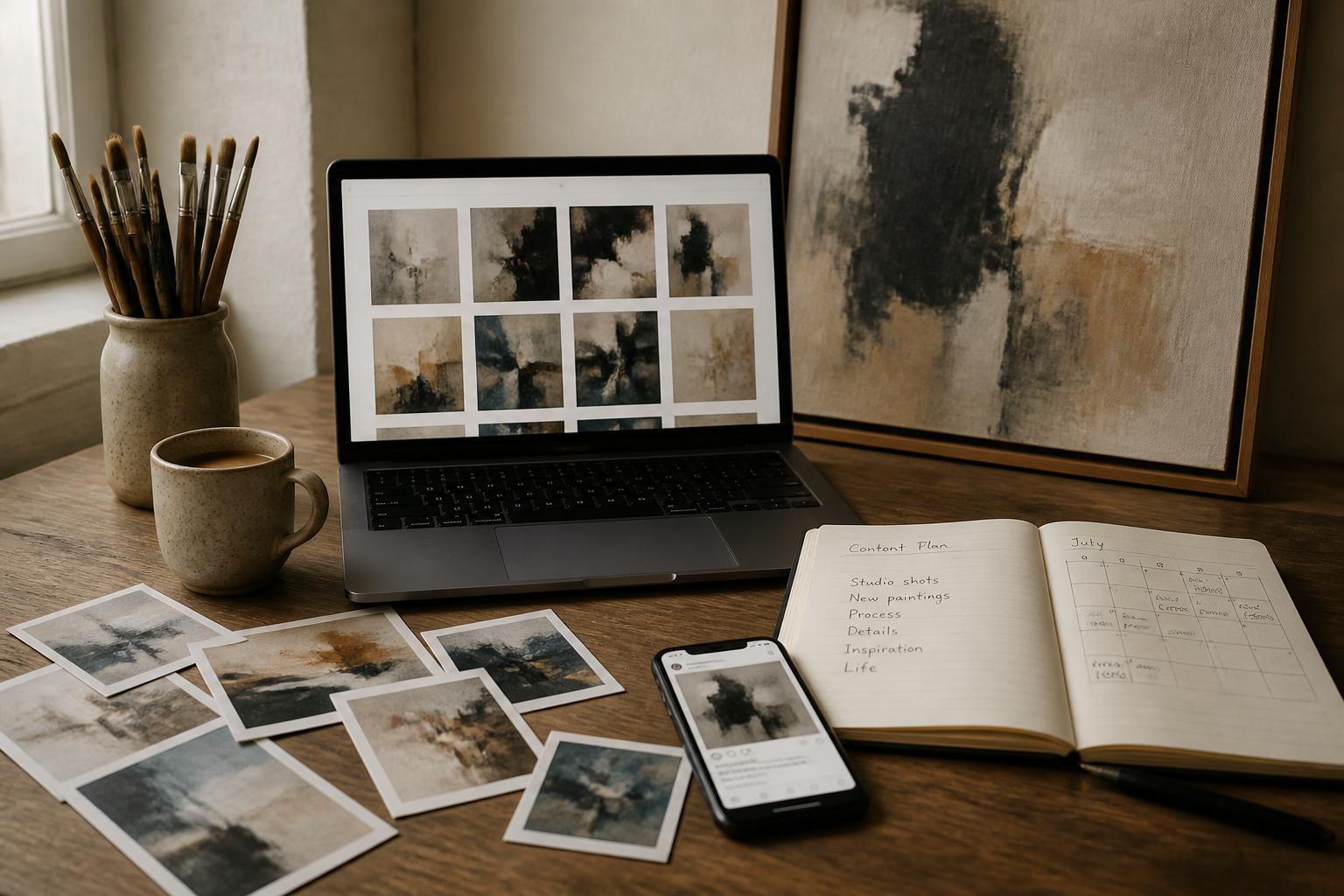
Social media is genuinely useful for artists. It is often the first place someone discovers a new painter, sculptor or printmaker; it keeps existing followers warm between shows; and it lets the work appear in front of the same person more than once before they enquire. It is also, for many artists, a quiet source of stress — posts that disappear in hours, reach that drops without warning, likes that never turn into enquiries, and a vague sense that everyone else is posting more.
This guide takes a calmer view. Social media is one part of a wider artist marketing plan, not the whole strategy. It works best when it sits on top of strong artwork images, clear descriptions, a website, a mailing list, exhibitions and a small repeatable routine. The goal here is not viral growth, daily posting or algorithm-chasing; it is a sustainable approach to social media for artists that supports the work in the studio rather than replacing it.
How to choose your main platform
A small consistent presence is always stronger than a scattered, half-active one. Choose one primary platform first and treat it seriously before adding a second.
A few honest filters when choosing:
- Medium and visual style. Does the work read well in a square feed, a vertical reel, a Pinterest board or a long-form video? Some media suit some platforms much better than others.
- Audience. Where do the people you want to reach already look? Local collectors, online buyers, curators and interior designers behave differently.
- Time and temperament. A platform that depends on daily video will burn out an artist who prefers writing; a platform that rewards quiet, image-led posts may suit a painter much better than one that rewards constant performance.
- Existing assets. A platform that lets you use the photographs, descriptions and detail crops you already have is far cheaper to run than one that demands constant new formats.
Two further rules of thumb. Visual work does not automatically mean every visual platform is worth using — three half-maintained accounts will almost always produce less than one well-run one. And it is rarely useful to copy another artist's platform mix without understanding why it works for them; their audience, medium, time and personality may be very different from yours.
Turning one artwork into multiple posts
One artwork can generate several pieces of content without becoming repetitive. The goal is not to spam the same image but to show different useful views of the same piece across a few weeks.
A simple sequence for a single painting:
- full artwork image, clean and well-lit
- a detail crop focused on surface, edge or a specific passage
- a short process post — an earlier stage, a video clip, a layering shot
- a studio note about inspiration, location or the question behind the piece
- a caption built from the artwork description, adapted for the platform
- a framed image, or a scale shot with a person or room for context
- an "available works" post, if the piece is for sale
- a short reel or video that brings the surface to life
- an exhibition or installation image, if the piece has been shown
- a quiet post-sale or archive reflection once the piece has gone
Few artists need to use all of these for every work. Three or four well-chosen posts spaced over several weeks will usually serve a single piece better than a single launch post that disappears in a day.
How often should artists post?
Consistency matters more than intensity. Daily posting is not required, and posting every day at the cost of studio time is almost always a bad trade.
A few practical guidelines:
- two to four useful posts per week is more sustainable than posting every day badly
- match the cadence to your studio time and the assets you actually have ready
- batch the work where possible — a single studio session can produce a month of photography and writing if you plan for it
- review what actually leads to website visits, enquiries, mailing-list signups or genuine conversations, not just likes
- do not sacrifice making the work to feed the platform
How often artists post on Instagram or any other platform should follow the work, not lead it. A quiet month in the studio that produces one strong body of work will always be a better foundation for social media than a month spent producing content but no paintings.
Social media around exhibitions, open calls and launches
Social media supports real-world visibility particularly well. An exhibition or studio event is one of the rare moments where consistent posting before, during and after a date produces clear, measurable results — visits, opening-night attendance, post-show enquiries.
A useful arc around an exhibition:
Open-call selection and exhibition news can be shared professionally — calmly stated, with clear details, ideally with strong images of the work that was accepted. The supporting guides on open calls for artists and how to prepare artwork for an exhibition cover the planning side in more depth. Social media should support the exhibition; it should not replace direct invitations, gallery emails or follow-up to known collectors.