
Best Artist Portfolio Websites
A practical guide to choosing the best portfolio website platform for artists, comparing the features that matter for presenting work, attracting enquiries and building a professional online presence.
16 min read
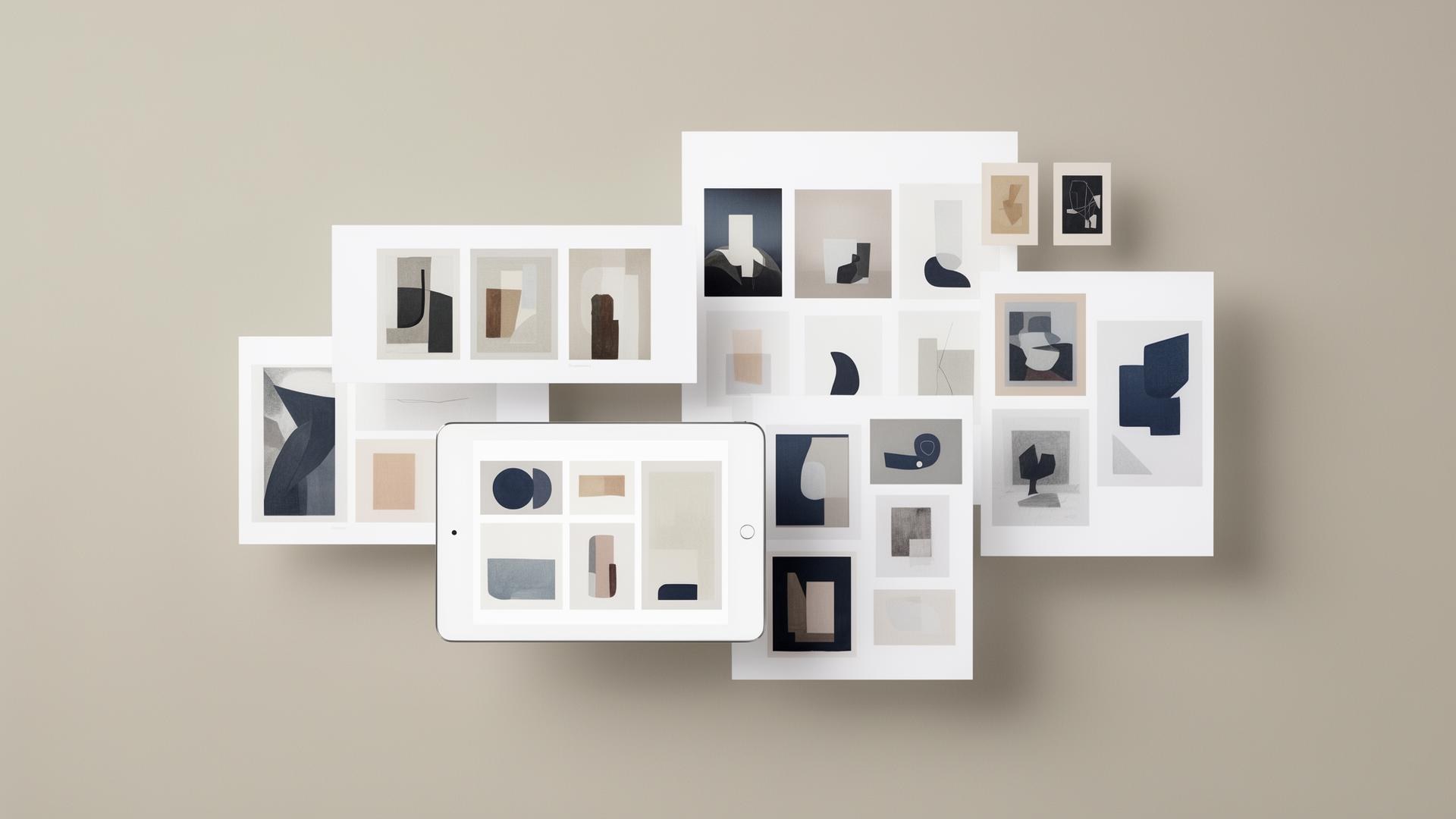
Artists often ask which portfolio website is "best", but the right answer depends on what you need the portfolio to do. Some artists want a quiet space to present recent work. Others need a site that supports open call applications, gives galleries and curators enough context to assess the practice, supports direct sales, or grows into a long-term archive of every piece they have ever made. The "best" portfolio website is the one that fits the work you make and the way you want to be found, contacted and remembered.
This guide looks at the main types of artist portfolio websites available to practising visual artists — painters, sculptors, printmakers, photographers and mixed-media artists — and what to check before committing to one. It is not an affiliate ranking; there is no single "number one" platform for everyone.
What makes a good artist portfolio website?
A good artist portfolio website does a small number of things very well. It presents the work clearly, it tells a visitor who you are, and it gives them an obvious way to get in touch. Beyond that, the differences between platforms come down to how well they support the slower, less visible parts of an artist's practice: records, sales context, and growth over time.
The features that genuinely matter are:
- Clear presentation of artwork. Large, uncluttered images, with space around them and minimal interface. The work should not be competing with sidebars, social icons or auto-playing slideshows.
- Simple navigation. A visitor should be able to find your work, your statement and a way to contact you within a few seconds. Most artist sites do not need more than five or six top-level pages.
- Good image quality. Sharp uploads, sensible compression, and the ability to display work at a size that does it justice on a laptop, tablet or phone.
- Individual artwork details. Each significant piece should have its own page with title, medium, dimensions, year, and availability. A grid of images without context is a gallery wall in a vacuum.
- Artist biography and statement. Short, current and written in your own voice. Galleries and curators expect both.
- An enquiry route. A contact form, an email address, or both. Buyers and curators should not have to hunt.
- Mobile-friendly layout. Most first visits to an artist's site now happen on a phone. If the site is hard to read or navigate on mobile, the visitor leaves.
- SEO basics. Editable page titles, meta descriptions, clean URLs and alt text on images. Without these, the site is effectively invisible to search engines.
- Professional trust. Consistent typography, working links, a real domain name, no broken images, no Lorem ipsum.
- Room to grow. A site that is comfortable with twenty works should still be comfortable with two hundred.
Portfolio website or full artist website: what is the difference?
A portfolio website is, at its simplest, a curated selection of work shown well online. A full artist website is broader. It still presents work, but it also carries the supporting material that makes a practice legible to outsiders: a current biography, an artist statement, a CV with exhibitions and collections, news or a journal, enquiry and sales information, and — for serious practices — artwork records, certificates and provenance notes behind the scenes.
Many artists begin with a portfolio site and gradually find they need more. The work accumulates, exhibitions add up, collectors start asking for documentation, and the simple gallery of images stops being enough. At that point the portfolio becomes one part of a fuller artist website rather than the whole thing. If you are at that stage, the companion guide How to Build an Artist Website walks through the broader structure in detail.
The main types of artist portfolio websites
Before comparing individual platforms, it helps to understand the categories. Most artist portfolio websites fall into one of the following:
- General website builders — Squarespace, Wix, WordPress and similar.
- E-commerce platforms — Shopify, WooCommerce and equivalents.
- Portfolio and community platforms — Behance, Adobe Portfolio, ArtStation, Cargo.
- Online marketplaces and galleries — Saatchi Art, Artfinder, Etsy, Folksy.
- Specialist artist portfolio and archive systems — built around artwork records, inventory and provenance as well as public presentation.
- Custom-designed websites — bespoke builds for artists with specific requirements or established profiles.
Each category has a different centre of gravity. Choosing well usually means matching the category to what the practice actually needs, rather than starting with a brand name.
General website builders for artist portfolios
Squarespace, Wix and self-hosted WordPress are the most common starting points for artists who want a polished website without writing code.
Strengths. Wide choice of templates, reasonable image handling, straightforward editing, built-in hosting and SEO controls. Good for getting a professional-looking site online quickly. WordPress, especially with a well-built theme, offers the most long-term flexibility.
Limitations. Templates are designed for a wide market and rarely centre the artwork as fully as a specialist artist platform. SEO and image handling vary in quality. WordPress requires ongoing maintenance — plugin updates, security, backups — that many artists underestimate.
Best for. Artists who want a general-purpose artist website with a portfolio section and do not yet need deep artwork-record functionality.
E-commerce platforms for artists
Shopify, WooCommerce and similar platforms are built around selling. For artists making prints, editions or merchandise, they handle product variants, inventory, payments, shipping and tax cleanly. For more on the wider sales process, see How to Sell Artwork Online.
For an artist whose practice is mainly unique original work sold by enquiry, an e-commerce platform is often more than needed. The structure pushes you towards thinking of every artwork as a product, which can flatten how the work is presented. Supporting context — artist statement, exhibition history, provenance — has to be bolted on top.
If you do sell from your portfolio site, make sure the platform supports clear pricing, sensible shipping terms, and the ability to issue certificates of authenticity where appropriate. A working checkout is only a small part of why a collector decides to buy.
Portfolio and community platforms
Behance, Adobe Portfolio, ArtStation and Cargo are designed around creative-sector visibility — discovery, peer networking and a clean presentation layer linked to a community.
For graphic designers, illustrators and concept artists working in commercial pipelines, they can be excellent. For many fine artists — painters, sculptors, printmakers and photographers working in a gallery context — they are usually better treated as a secondary presence rather than the main professional home. The presentation is tilted towards illustration and commercial work, and the platforms are not set up to hold the long-term records, provenance and collector relationships that serious artistic practice produces. They can be a useful secondary presence, but most fine artists are better served by their own website as the central point.
Online marketplaces and galleries
Saatchi Art, Artfinder, Etsy and Folksy are marketplaces. They are useful for discovery and for reaching buyers who would not otherwise find you, but they are not the same as an artist portfolio website.
On a marketplace you are one of many artists in a shared shop. The platform controls the layout, the search ranking, the buyer relationship and, often, the data. Fees can be significant, and the buyer is usually a customer of the marketplace rather than a collector of your work. Marketplaces can introduce work to new audiences and generate sales — particularly early in a career — but a marketplace profile should support an artist's own website, not replace it.
Specialist artist portfolio and archive systems
A small group of platforms are built specifically for artists, with the public portfolio and the private artwork record treated as two sides of the same system. Each public artwork page corresponds to a full artwork record behind the scenes — inventory number, dimensions, materials, provenance, exhibition history, sales history, location history and, where appropriate, a certificate of authenticity.
This matters more than it first appears. As a practice grows, the artist who can answer "where is that painting now, what did it sell for, where has it been exhibited, and what does the certificate say?" within a few seconds is the artist galleries, collectors and estates want to work with. A pretty portfolio without records becomes a problem within ten years; a well-kept archive supports the work for decades.
Vault Canvas is one example of this kind of system, built around UK artists who want their public-facing portfolio to grow out of a properly maintained archive rather than the other way round. The deeper mechanics — archive databases, artwork management, certificates of authenticity and provenance — are covered in their own articles.
Free artist portfolio websites: when are they enough?
Free artist portfolio websites have a real place. For an emerging artist with a small body of work, a free site on Adobe Portfolio, a basic Wix or WordPress.com plan, or a simple Cargo page can be enough to get the work online and start applying to open calls.
The limitations show up later: platform branding, a long generic URL, limits on pages or images, weaker SEO controls, and restrictions on selling. "Free to start" and "suitable as a long-term professional base" are not the same thing. A reasonable approach is to use a free site to test what you actually need, then move to a paid plan or a more capable platform once the practice is producing work and attracting enquiries with any regularity.
What to look for in an artist portfolio website builder
When comparing platforms, the surface-level question is "which looks nicest?" The more useful questions are practical:
- Image quality and layout control. Can you upload high-resolution images, control how they crop, and present work at a sensible size on every device?
- Individual artwork pages. Does each piece get its own page, or are you stuck with grids and lightboxes?
- SEO control. Can you edit page titles, meta descriptions, URLs and alt text on every page, including artwork pages?
- Easy updates. Adding a new work, updating availability, or changing a price should take minutes, not an afternoon.
- Mobile performance. Pages should load quickly on a phone, with images that are sharp without being heavy.
- Contact and enquiry tools. Forms, anti-spam, sensible delivery of messages to your inbox.
- Sales or payment options. Where relevant, the ability to take payment for prints, editions or originals without bolting on a clumsy third-party tool.
- Organisation by series, medium, availability or year. The platform should support how you think about your work, not force a single rigid structure.
- Export and ownership. Can you export your content and images cleanly if you ever need to move? You should never feel trapped.
- Cost and scalability. Pricing that is sensible now and remains sensible when you have a hundred works rather than ten.
A platform that does most of these well, even if it is less visually fashionable, will serve you better than a beautiful template that quietly fails at the basics.
What your online artist portfolio should include
Whichever platform you use, the contents of a strong online artist portfolio are broadly the same:
- A curated selection of work — not everything you have ever made, but a coherent body that represents the current direction of the practice.
- A clear series or collection structure, so a visitor can see how the work groups together.
- An individual page for each significant work, with title, medium, dimensions, year, and price or availability.
- A current artist biography.
- A current artist statement.
- A CV or exhibitions list, including selected exhibitions, awards, residencies and collections.
- A reliable contact or enquiry route.
- Sold or past work kept visible where appropriate, with availability marked clearly.
- Certificate or provenance notes for significant works, even if the full record stays private.
This article focuses on the platform decision itself; selection and sequencing are separate questions.
Portfolio websites for selling artwork
If you want your portfolio to do some of the selling, there are two broad approaches: direct sales via a checkout, or enquiry-led sales where buyers contact you and you handle the transaction yourself.
Direct sales can work particularly well for prints, editions and lower-priced originals, where the buyer is comfortable clicking "buy" without a conversation. For original artwork, our guide to how to sell artwork online covers the wider process of preparing the work, pricing, buyer trust, payment, provenance and delivery. Enquiry-led sales tend to work better for significant originals, commissioned work and higher-value pieces, where the buyer wants to ask about delivery, framing, viewing or provenance before committing.
Either way, the things that build buyer confidence are not new:
- Clear pricing, or a clear statement that prices are available on request.
- Honest, plain-English delivery information, including timescales and any limits.
- Sensible photography that shows the work as it really is, including scale shots where helpful.
- A certificate of authenticity for significant pieces.
- A visible artist behind the work — biography, statement, exhibitions.
Trust matters more than the checkout button.
Portfolio websites for galleries, curators and open calls
When a gallery or curator visits an artist's portfolio, they are usually trying to answer specific questions in a short time: is there a coherent body of work? Is the practice serious? Are the basics in place? Could I show this artist, write about this artist, or include this artist in a programme?
A portfolio that supports that quick assessment usually includes:
- A coherent, current body of work, presented as series rather than a single long grid.
- A clear CV or exhibitions list.
- A current artist statement, ideally one or two short paragraphs.
- High-quality images that load reliably.
- Artwork details — title, medium, dimensions, year — visible on each work.
- Press, reviews or downloadable information where relevant.
- An obvious, working contact route.
The companion guides on how to get your art into a gallery and open calls for artists go into what gatekeepers look for in more depth.
Connecting your portfolio website to artwork records
A portfolio website is the public face of a practice. Behind it sits, or should sit, a record of every significant work you have made. Each public artwork page should correspond to a private record that includes:
- The inventory number or unique reference for the work.
- Full artwork documentation — title, dimensions, materials, year, edition information where relevant.
- provenance — who has owned the work since it left the studio.
- Exhibition history.
- Sales history.
- Location history — where the work is now and where it has been.
- A certificate of authenticity record for significant pieces.
Early in a practice this can live in a spreadsheet. As the work accumulates, a dedicated archive database and an artwork management workflow become more useful, especially if you are working with galleries, collectors or institutions. The portfolio website is the shop window; the archive is the foundation it sits on.
Common mistakes when choosing a portfolio website
A few patterns turn up again and again when artists ask for help with their existing sites:
- Choosing only on template appearance. A template that photographs well in a marketing screenshot often fails on the practical questions above.
- Uploading everything. A portfolio is curated. Two hundred uneven works is worse than thirty strong ones.
- Choosing a marketplace instead of an owned website. Marketplaces are a sales channel, not a home.
- Ignoring individual artwork pages. A grid of thumbnails with no context is not a portfolio.
- Ignoring SEO. Default titles, missing meta descriptions and untyped URLs make the site harder to find than it needs to be.
- No clear enquiry route. Buyers and curators give up quickly if contact is hidden.
- Weak mobile experience. Phones are now the primary device for first visits; a site that ignores them loses most of its audience.
- No plan for records, certificates or provenance. The site looks fine for two years, then becomes a problem when collectors start asking for documentation.
- Choosing a system that cannot grow with the practice. Migration costs time and risks losing context that took years to build up.
Recommended approach for different types of artist
There is no universal best platform, but there are sensible starting points depending on where you are in your practice:
- Emerging artist with a small body of work. A simple, free or low-cost site that prioritises clear presentation and is easy to update. Plan to upgrade once the work and the enquiries justify it.
- Artist applying to open calls. A site with strong individual artwork pages, a current CV and statement, and clean URLs you can paste into application forms.
- Artist selling originals by enquiry. A site that presents work seriously, includes pricing or availability, and makes contact effortless. A checkout is optional.
- Artist selling prints or editions. A site or platform with a real e-commerce layer, sensible shipping rules, and the ability to issue certificates where appropriate.
- Artist with gallery interest. A site that reads as a professional practice — coherent series, exhibition history, statement, contactable artist — rather than a personal blog.
- Artist with a growing archive. A specialist artist portfolio and archive system, where the public portfolio is the visible layer of a properly maintained record.
- Artist who wants a simple, low-maintenance site. A small site on a stable platform, updated a few times a year, with the artwork records kept separately.
The right answer is rarely the most fashionable one. It is the one that fits the work you make and the way you want the practice to be looked after.
If you want to see what those choices look like in practice, Artist Portfolio Examples describes adaptable portfolio structures by stage and medium, and What Makes a Good Artist Website? sets out the quality criteria to assess your choice against.