
Artist Portfolio Examples
Explore what strong artist portfolio websites have in common, from image selection and navigation to artist statements, artwork pages and clear contact routes.
18 min read
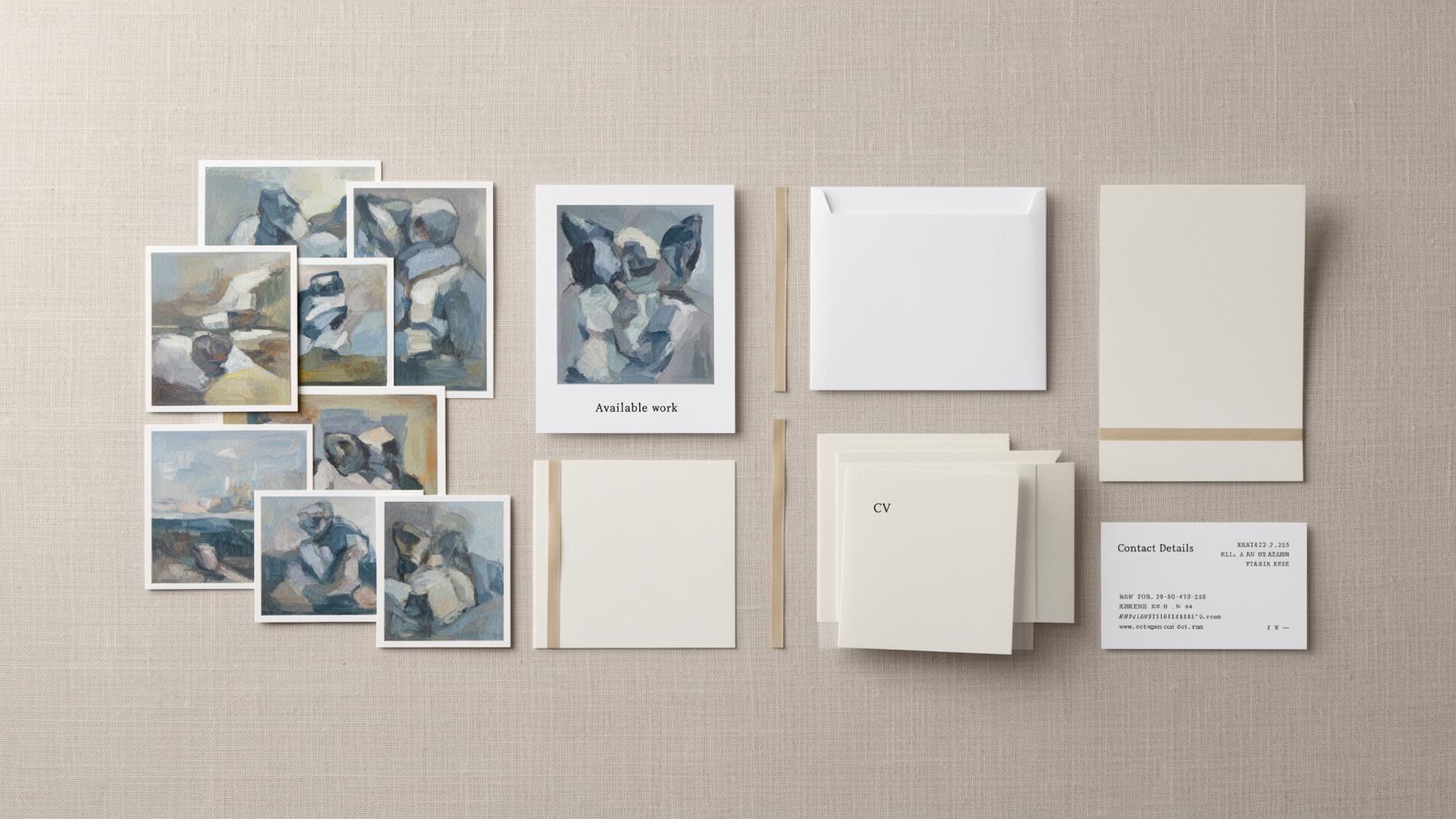
Artists often search for artist portfolio examples because they want a clearer sense of how to arrange their own work. Looking at how other practices are organised online is useful, but copying another artist's website rarely produces a strong result. The patterns behind good portfolios — what is included, how work is grouped, how each piece is presented — matter much more than any single design.
This guide is written for practising visual artists — painters, sculptors, printmakers, photographers and mixed-media artists — who want to structure a professional online portfolio. It is not aimed at student admissions, GCSE or AP coursework, university applications, graphic-design job portfolios, makeup or tattoo portfolios, or music-artist pages. Each of those has its own conventions and audiences.
The artist portfolio examples below describe structures, sections and presentation choices rather than specific websites. They are adaptable models, not templates to copy outright. A strong artist portfolio reflects the stage of the practice, the medium, the sales model and the artist's wider professional goals — including how the work is presented to galleries, open-call panels and individual collectors.
What Makes a Strong Artist Portfolio?
The most useful artist portfolios share a small number of qualities, regardless of medium or career stage.
- Curated selection. A portfolio shows a chosen body of work, not every piece ever made. Restraint signals confidence.
- Clear series or collection structure. Work is grouped so visitors understand the threads running through the practice.
- A strong opening image or body of work. The first impression tends to decide whether anyone looks further.
- Individual artwork details. Title, medium, dimensions and year are present for each significant piece.
- Artist biography. A short, factual account of the artist's background.
- artist statement. A concise explanation of the work's concerns.
- CV and exhibitions. A list of shows, awards, residencies and relevant publications.
- Enquiry route. A clear way for galleries, curators and buyers to make contact.
- Good image quality. Photographs that represent the work accurately, with consistent colour and framing.
- Mobile-friendly layout. Most visitors arrive on phones; the site should still feel composed there.
- Connection to records, provenance and certificates. Behind the scenes, the work links to proper artwork records so ownership history and authenticity can be supported when needed.
For broader website guidance see How to Build an Artist Website, What Makes a Good Artist Website? and the practical walk-through in How to Create a Professional Artist Portfolio.
Why Artist Portfolio Examples Are Useful
Studying artist portfolio examples is most valuable when the goal is to understand patterns, not to copy a design. A good example shows how another artist solved a familiar problem — how to introduce a new series, how to handle available and sold work side by side, how to balance images and writing, how to present prints alongside originals — and lets you decide whether that solution fits your practice.
Looking at several portfolios at once helps in three specific ways:
- Calibration. Examples make it easier to judge whether your own selection is too long, too short, too uneven or too narrow.
- Audience awareness. Different examples make visible the different audiences a portfolio serves — galleries, open-call panels, collectors, curators, press, fellow artists — and how the same body of work can be framed for each.
- Inspiration without imitation. Strong examples surface ideas about layout, sequencing and writing tone that you can adapt into your own visual language.
For more structured artist portfolio inspiration on choosing platforms and templates, Best Artist Portfolio Websites is a useful companion to this guide.
Artist Website Portfolio Examples
Artist website examples generally share a small number of recurring shapes. The most useful ones are organised around how the artist actually works, rather than around a template.
The simple emerging-artist portfolio
A clean, credible first website for artists with a smaller body of work.
Suggested structure: Home · Selected Work · About · Artist Statement · Contact.
Ten to twenty strong works is often enough. The aim is to look complete, not extensive. Avoid padding with weaker pieces and avoid empty "coming soon" sections. One obvious contact route matters more than complex enquiry forms or shop features at this stage. This is the right shape for artists building a first professional website, applying to early open calls, or moving beyond Instagram into a more permanent online home.
The series-led painting portfolio
Suits painters, landscape artists, abstract artists and any practice developing recognisable bodies of work over time.
Suggested structure: Home · Current Series · Available Works · Selected Past Work · About · Statement · Contact.
Organise the work by series rather than dumping every painting into one long grid. Each series benefits from a short written introduction. Each significant painting should ideally have its own page with full details and a high-quality image. Consistent photography and image ratios across a series help the work read as a coherent body. Sold work can remain visible if it is clearly marked, since it supports the history of the practice.
Behind the scenes, this kind of portfolio works best when it sits on top of a properly maintained record system. The artwork archive and record system is what allows the public site to stay accurate as the practice grows.
The mixed-media or multidisciplinary portfolio
For artists working across several media without wanting the practice to look scattered.
Suggested structure: Home · Work by Series · Work by Medium · Projects / Installations · About · Statement · Contact.
Lead with the conceptual thread, not only the medium. A multidisciplinary practice is usually held together by recurring concerns rather than materials. Use short project introductions to frame installations or experimental work. Keep navigation simple — two ways into the work (by series and by medium) is usually enough. Cross-reference series and projects so the site does not feel like several unrelated practices stitched together.
The archive-led portfolio
For artists with a long history who want the site to function as both a public portfolio and a public record of the practice.
Suggested structure: Home · Current Work · Series · Selected Past Work · Archive (by year) · Exhibitions · CV · About · Contact.
A chronological archive should usually be a secondary entry point, not the front door. The current work and most resolved series belong nearer the top; the year-by-year archive supports researchers, writers and curators who need to trace the development of the practice.
Online Artist Portfolio Examples
An online artist portfolio is more than a website: it is the version of the practice that exists wherever someone searches. The strongest online portfolios are built so that an individual artwork page, a series page or an exhibitions page can each stand on its own when shared, linked or surfaced in search.
The curated highlights portfolio
A short, deliberately narrow selection — sometimes only six to twelve works — used by artists who want a focused online presence rather than a comprehensive archive. Each work carries full details and a generous image. This pattern works particularly well as a landing layer in front of a deeper site, and as the section most often shared on social platforms.
The series-and-availability portfolio
Two clearly separated grids — Available Works and Past Work / Sold — used by artists selling directly online. Each artwork page carries availability, dimensions, framing, delivery information and a note about any accompanying certificate of authenticity. Availability should never be ambiguous, pricing should be handled consistently (either listed or "price on request", not a random mix), and enquiry buttons should be obvious on every artwork page rather than buried in a separate contact form.
For the wider sales process, see how to sell artwork online and what is artwork provenance?.
The collector-facing portfolio
A small, polished site focused on individual buyers rather than gatekeepers. Fewer pages, more space around each work, clear buying information and a personal tone in the writing. Trust matters more than design flair: clear information about the artist, the work and the buying process does more for sales than animation.
The printmaker or edition-based portfolio
For artists selling editions, prints or other multiples alongside or instead of unique works.
Suggested structure: Home · Editions / Prints · Original Works · About the Process · Delivery / Terms · Contact.
Edition size, paper, process and numbering all matter to buyers and belong on the artwork page. Buyers need to understand whether they are looking at an original print, an open reproduction or a limited edition — ambiguity here is a frequent source of complaints. The certificates of authenticity for artwork and artwork management for artists articles describe the record-keeping that supports edition-based practices.
The photographer's portfolio
Photography portfolios often work best when arranged by project or series rather than as one long feed. Tight editing strengthens each series, image sequencing is part of the work, and where prints are available, sizes, edition information and availability should be clear rather than left for buyers to ask.
Professional Artist Portfolio Examples for Galleries
A professional artist portfolio for galleries is shaped around how curators, directors and gallery staff actually look at work. Most spend less than a minute on a first visit. The portfolio's job is to make that minute count.
The gallery submission portfolio
A version of the series-led structure tightened for fast assessment.
Suggested structure: Home · Selected Works · Current Series · CV / Exhibitions · Statement · Press / Downloads · Contact.
What galleries tend to look for:
- A coherent current body of work, not a survey of every direction the practice has taken.
- Clear, full artwork details on every significant piece: title, medium, dimensions and year. Missing details can make a portfolio look less prepared than the work deserves.
- A concise artist statement and a clearly written CV that read on screen, not only as a PDF.
- High-quality images that open at a usable size without forcing a download.
- A downloadable press sheet or portfolio PDF that supports, rather than replaces, the online portfolio.
- Contact details that are not hidden behind multiple clicks.
For the wider context around gallery approaches, see how to get your art into a gallery and the guidance on writing the Artist CV and Biography that usually accompanies a gallery submission.
In the UK, regional gallery programmes, artist-led spaces and degree-show pipelines often expect a portfolio website plus a short PDF or PowerPoint pack. A site that loads quickly, reads well on a phone and links cleanly to a downloadable summary is well placed for both UK gallery submissions and international applications.
Artist Portfolio Examples for Open Calls
An artist portfolio for open calls is judged against a brief, often by a panel reading dozens or hundreds of applications in one sitting. The portfolio needs to make a clear case quickly while still rewarding closer reading.
The open-call portfolio
A focused subset of the site tuned to the brief of each application.
- A short, current selection of works that fit the call's theme or curatorial direction.
- Each selected work shown with full details and a strong image.
- A concise statement that connects the work to the brief without restating it.
- A clean CV with relevant exhibitions, residencies, awards and publications.
- An obvious way to download a PDF version of the portfolio if the application requires one.
In the UK, open calls run by Arts Council-supported organisations, regional galleries, artist-led spaces, art fairs and prize programmes generally expect the same package: a short artist statement, a CV, a tightly edited image set with full captions, and a portfolio link or PDF. A site that already supports that package without rebuilding it for every application saves significant time across an application year.
For application-side preparation, open calls for artists and how to write an artist statement cover the wider work that sits around the portfolio.
Art Portfolio Layout and Structure
A useful way to think about artist portfolio layout is to start from a small set of recurring patterns and decide which fits the work best.
- Simple grid. A single page of thumbnails, often used by emerging artists. Works well when the body of work is small and consistent.
- Series landing page. Each series has its own page with an introduction and a grid of works. Suited to painters and printmakers developing distinct bodies of work.
- Featured artwork plus grid. One large hero image leads into a grid of further works. Useful for highlighting a current focus piece.
- Available and sold split. Two clearly separated grids. Helps buyers see what is currently available without losing the history of the practice.
- Project-led layout. Each project is treated as a self-contained page with text, images and supporting material. Common for mixed-media and installation work.
- Chronological archive. Work organised by year. Best used as a secondary view rather than the main entry point, since it can flatten the practice into a list.
- Exhibition-style sequence. Works presented in a deliberate order, almost like a virtual hang. Useful for photographers and conceptually-driven practices.
Most artists end up combining two or three of these patterns rather than using a single one across the whole site. The right combination depends on how the practice is organised in the studio: by series, by project, by medium, by year, or by availability.
How Many Artworks Should an Artist Portfolio Include?
There is no single correct number, but a few patterns hold across most practices:
- Emerging artists: 10–20 strong works, edited to a single coherent direction.
- Mid-career practising artists: 20–40 works, usually grouped into two or three current series with a Selected Past Work section behind them.
- Established artists with long histories: 40+ works, but tightly grouped by series, period or project rather than presented as one long grid.
- Open-call applications: typically 6–12 works chosen to fit a specific brief.
- Gallery submissions: 10–15 works that read as a current body, with a CV and statement attached.
The aim is a coherent body of work, not a complete archive. A shorter, considered selection almost always reads better than a longer uneven one. If a work would not survive being included in a printed catalogue of the practice, it probably should not sit in the public portfolio either.
How to Present Artwork Clearly
Artist portfolio presentation matters as much as selection. The way each work is shown decides how it is read.
- Image quality. Photograph or scan each work in even, neutral light, with accurate colour and a square-on perspective. The how to photograph artwork guide covers the practical setup.
- Consistent ratios. Work shown at consistent crops and aspect ratios across a series feels like a coherent body rather than a set of stray images.
- Generous space. Each significant work should sit with enough room around it that the eye can settle. Cramped grids fight the work.
- One image per work, plus details. A main image followed by a detail shot or two carries more than a single wide shot.
- Captions on every image. Title, year, medium and dimensions belong with the image, not hidden in a download.
- Mobile checking. Most visitors will see the portfolio on a phone first. Confirm that images, captions and navigation all hold together at that size.
What to Include With Each Artwork
A consistent set of fields makes individual artwork pages credible to galleries, curators and buyers, and easier for search engines to understand.
- Title and year.
- Medium and substrate (for example, "oil on linen" or "etching on Somerset Velvet").
- Dimensions, in cm with inches in brackets where appropriate.
- Edition information, for prints and editioned works.
- Series or project, with a link to the series page.
- Short description, one or two sentences placing the work in its series or process.
- Availability, with a clear status: available, sold, in private collection, on loan, on exhibition.
- Provenance notes, where the work has a history worth recording.
- Certificate of authenticity, where one is supplied.
- Framing, delivery and packaging notes, for available work.
- Enquiry button, on every available work.
A small set of reusable patterns covers most descriptions:
Title, year. Oil on linen. 80 × 60 cm. Available.
Title, year. Acrylic and graphite on paper. 50 × 40 cm. Part of the Coastal Notes series, made in response to a period working on the south-west coast. Available.
Title, year. Oil on canvas. 100 × 80 cm. Framed in a hand-finished oak tray frame. Ships insured within the UK and internationally on request. Supplied with a signed certificate of authenticity. Price on request.
Descriptions like these are easier to maintain consistently when they sit alongside proper artwork cataloguing records rather than being rewritten from scratch each time. The longer guide to clear artwork descriptions covers tone, length and structure in more depth.
Common Artist Portfolio Mistakes
Most weak artist portfolios share a small set of problems, regardless of medium.
- Copying another artist's design without understanding why it works for that practice.
- Uploading every piece of work the artist has ever made, with no editing.
- No clear current body of work; the visitor cannot tell what the artist is doing now.
- No individual artwork details, only thumbnails.
- No statement or biography, leaving the practice unexplained.
- Weak image quality, inconsistent colour or cropped corners.
- Confusing available and sold status, sometimes on the same page.
- Inconsistent pricing — some works with prices, others without, with no pattern.
- Relying entirely on Instagram or a similar feed as the main portfolio.
- Hidden contact details, or contact forms that hide the artist's email address entirely.
- No check on how the site behaves on mobile.
- No connection to proper artwork records, so prices, titles and editions drift between the website, invoices and certificates.
How Vault Canvas Helps Artists Build Stronger Portfolios
Stronger artist portfolios are almost always built on stronger underlying records. Most of the problems above — drifting titles, missing dimensions, inconsistent pricing, ambiguous availability, untracked provenance — are records problems first and presentation problems second.
Vault Canvas is the workspace that sits behind the public portfolio. It is built around the idea that each artwork has a single canonical record that everything else draws from:
- Artwork records. Title, year, medium, dimensions, series, status, location and edition information held once and reused everywhere the work appears.
- Images and descriptions. Main images, detail shots and short and longer descriptions stored alongside the work, so the same assets and writing support the website, gallery submissions and certificates.
- Series, availability and pricing. Series-level notes and a single status for each work that the public site and any invoice stay in step with.
- Provenance and certificates. Ownership and exhibition history alongside signed certificates of authenticity for artwork, attached to the same record.
- Exhibition and submission history. A running record of where each work has been shown or applied with, which feeds CVs and open-call applications.
Working from a single canonical record means the public portfolio stops being a separate job. A price change, a status change or a new exhibition only needs to be made once, and the portfolio becomes a reflection of the practice rather than a parallel project to maintain.
Artist Portfolio Checklist
A practical checklist to run through before publishing or relaunching a portfolio.
- Does the first screen show strong, current work?
- Is the portfolio curated rather than exhaustive?
- Are works grouped into clear series, projects or collections?
- Does each significant work have its own page with full details?
- Are titles, mediums, dimensions and years consistent across the site?
- Is availability clear on every work?
- Is pricing handled consistently — either prices or "price on request", not a random mix?
- Can a gallery find the statement and CV within two clicks?
- Can a buyer make an enquiry without searching for contact details?
- Are sold works clearly marked, where they remain visible?
- Are images consistent in colour, lighting and framing?
- Does the site read well on a phone as well as on a laptop?
- Are records, certificates and provenance handled behind the scenes, so the public portfolio stays in step with the underlying artwork records?