
Artwork Condition Reports: How Artists Can Record, Track and Protect Their Work
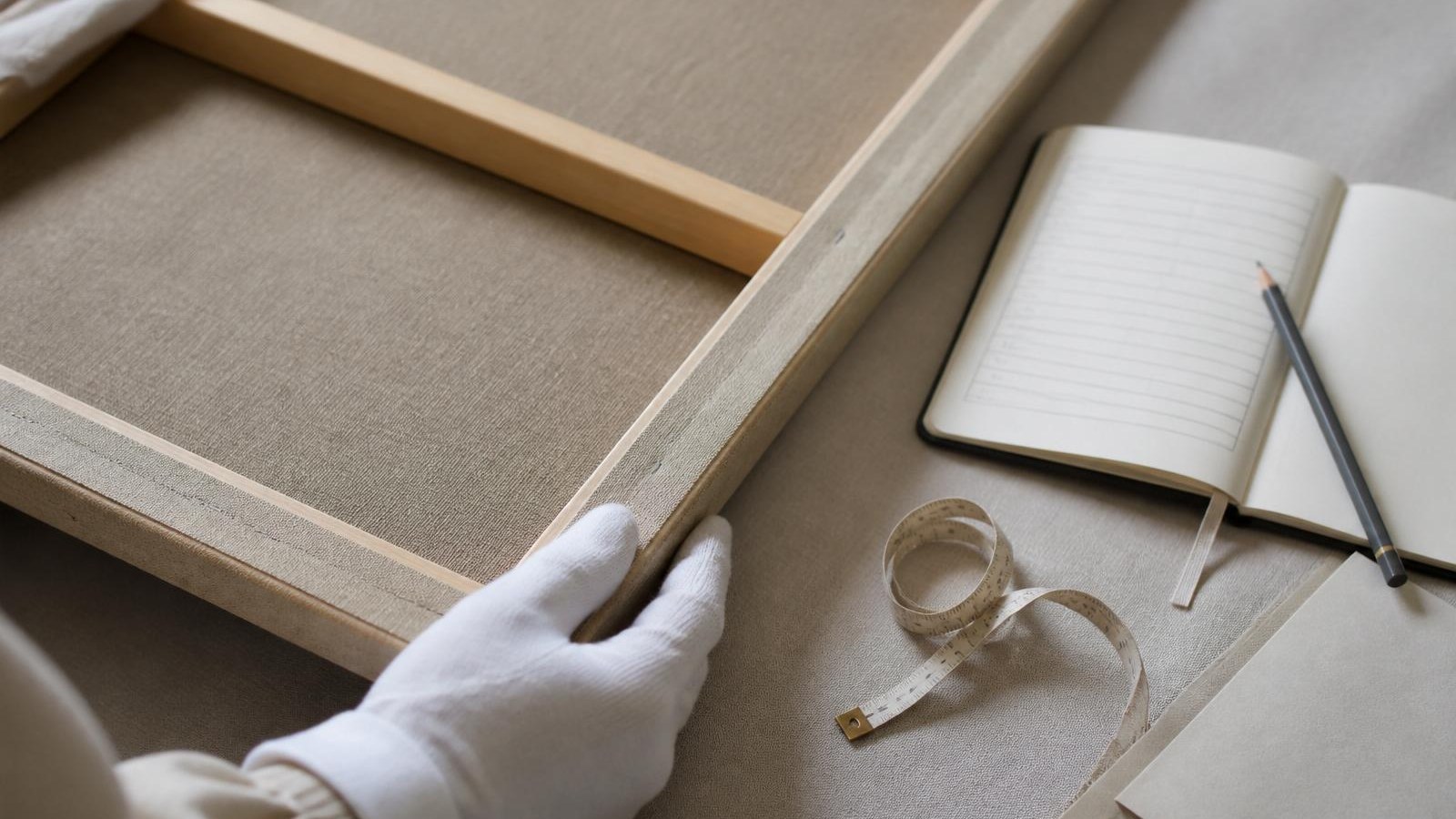
An artwork condition report is one of the most useful documents an artist can keep. It records the physical state of a work at a specific point in time, captures any existing wear or damage, and provides a baseline that future records can be compared against. For artists working across exhibitions, loans, sales, shipping, storage and insurance, condition reports turn vague memories about a piece into a clear, dated record that protects both the work and the people handling it.
This guide explains what an artwork condition report is, when artists should create one, what to include, and how to integrate condition reporting into a wider documentation workflow. It is written for practising artists managing their own studios, archives and sales, not for professional conservators, although the same principles apply at every level.
What Is an Artwork Condition Report?
An artwork condition report is a written record describing the physical state of an artwork at a given moment. It usually includes basic identifying details — title, artist, inventory number, medium, dimensions — alongside structured observations about the surface, support, frame, edges and any visible damage, repair or change. Photographs are normally attached or referenced.
The purpose is straightforward: to capture the work's condition before something happens to it. That "something" might be a journey, an exhibition, a loan, a sale, a framing job, a period in storage or a conservation treatment. By recording the state of the work beforehand, the artist creates a baseline that can be checked against later. If a chip appears on a corner after shipping, the condition report shows whether it was already there.
A condition report is not a value judgement and not a critique. It is a factual, observational document. It should be neutral, dated, signed and, where possible, supported by clear photographs.
Why Condition Reports Matter for Artists
Artists often think of condition reports as something museums or conservators worry about, but they matter just as much for independent practice. A condition report protects the artist, the buyer, the lender, the courier and the venue. It reduces disputes about damage, supports insurance claims, and contributes to the long-term provenance of the work.
Condition records also build trust. Collectors increasingly expect proper documentation, particularly for higher-value works, editioned pieces and works that move between exhibitions. A clear condition history reassures buyers that the work has been cared for and that any earlier issues are openly recorded.
Beyond the practical and legal benefits, condition reports help artists pay closer attention to their own work over time. They reveal how materials age, how frames behave in different climates, and where particular techniques are vulnerable. That feedback loop can inform future studio practice.
When Should Artists Create a Condition Report?
There is no single moment when a condition report becomes necessary, but there are several predictable triggers. As a working rule, a condition report should be created whenever the work is about to leave the artist's direct control or whenever its physical state may be questioned later.
Typical triggers include:
- Before an exhibition, loan or art fair
- Before shipping or transport, however short the journey
- Before and after framing, mounting or conservation work
- At the point of sale or transfer of ownership
- When a work returns from loan, exhibition or storage
- When a work is moved into long-term storage
- When a work is photographed for sale, insurance or archive purposes
- When damage or change is noticed during normal handling
For a busy studio, this can sound like a lot of reports. In practice, much of the information is repeated, and a good template makes the process quick. The first report on a work is usually the longest; subsequent reports note changes rather than re-describing the whole piece.
What Should an Artwork Condition Report Include?
A useful artwork condition report covers identification, physical description, observed condition and supporting evidence. The structure can be simple, but each field should be filled in consistently so reports can be compared over time.
Core fields typically include:
- Artist name and artwork title
- Inventory number or unique artwork ID
- Date of report and location where the assessment took place
- Medium and materials
- Support, surface and ground
- Dimensions (and weight where relevant)
- Frame, mount or stretcher description and condition
- Front condition (surface, varnish, paint layer, image)
- Back or verso condition (labels, inscriptions, repairs)
- Edges and corners
- Notes on previous repairs, restoration or interventions
- Photographs taken and reference numbers
- Handling, packing or shipping notes
- Assessor or reporter name and signature
- Follow-up action needed
The aim is not to produce a conservation-grade scientific report but to record what a careful, observant artist can see in normal studio light, supported by photographs. Specialist conservation assessments can be added later if needed.
Condition Reports for Paintings and Works on Paper
Different media call for slightly different attention. For paintings, the condition report should look at the paint layer, varnish, ground and support. Note any cracking, flaking, lifting, blanching, bloom, accretions, scratches or losses. Check the tacking edges, the stretcher and the back of the canvas or panel. Record any warping, bowing or movement in the support.
For works on paper, attention shifts to the sheet itself. Note foxing, staining, discolouration, cockling, tears, creases, abrasions, tape residue and hinge condition. Check the mount, window mat and backing board. Record whether the work is floated, hinged or fully adhered, and whether the glazing is glass or acrylic.
Other media — sculpture, ceramics, textiles, prints, photographs, mixed media and digital works on physical supports — each have their own vocabulary, but the principle is the same: structured, neutral observation with photographs.
Recording Damage, Wear and Previous Repairs
Damage notes should describe what is visible, where it is, and how large it is. Vague descriptions such as "a mark on the surface" are difficult to compare against later reports. Better practice is to note the location using a simple grid or clock-face reference, give an approximate size in millimetres or centimetres, and describe the character of the mark — for example, "a 4 mm circular scuff in the upper-right quadrant, near the edge of the canvas, with no paint loss visible."
Previous repairs and restoration should always be recorded, even if they were carried out by the artist themselves. Note the date if known, the area treated, the materials used, and the outcome. If a piece has been retouched, relined, consolidated, cleaned or re-varnished, that information belongs in the condition history.
Honesty matters. A condition report that conceals known damage undermines trust and can cause real problems at the point of sale, loan or insurance claim.
Photographing Artwork Condition
Photographs are central to a useful condition report. At minimum, a report should include a clear overall image of the front, an overall image of the back, and close-ups of any noted issues. Where possible, raking light photographs (with a light source angled across the surface) help reveal surface texture, cracks and distortions that flat lighting hides.
Each photograph should be clearly named and referenced in the report. A simple convention such as INV-0123_2026-06-26_front.jpg keeps files easy to find and order. Include a scale or ruler in close-up images so the size of any feature is unambiguous.
Photographs should be stored alongside the written report in the artwork's archive record, not scattered across phones, desktops and email attachments. A clear digital asset management approach makes this much easier.
Condition Reports for Exhibitions and Loans
Whenever a work leaves the studio for an exhibition or loan, two condition reports are usually involved: one created by the artist or lender before the work travels, and one created by the receiving venue when the work arrives. A second pair is created on return. Comparing the four reports makes any change in condition easy to identify.
For loans in particular, a clear condition report is a basic requirement. Most professional venues will produce their own, but the lender's report sets the baseline. It should travel with the work, ideally as both a printed sheet inside the crate and a digital file shared in advance.
Artists who exhibit regularly benefit from keeping a record of each show a work has appeared in, alongside the condition reports created for each outing. That cumulative history becomes part of the artwork's exhibition record and contributes to its provenance.
Condition Reports for Shipping and Storage
Shipping is one of the most common causes of damage to artwork, and condition reports are the main protection against disputes. Before a work is packed, the artist should create a condition report and a set of clear photographs. The packing itself should be photographed where possible, especially for high-value or fragile works.
On arrival, the recipient should unpack the work carefully and check it against the report. Any new damage should be noted immediately, photographed, and reported to the carrier before the packing materials are discarded. Most carriers require notification within a short window, so timing matters.
For works going into storage, a condition report at the point of storage and another at the point of retrieval helps identify any changes caused by environment, handling or accident. Long-term storage records also help when works are eventually retrieved for sale, exhibition or loan years later.
Climate is worth noting in any storage record. Sudden swings in temperature and humidity affect paint layers, paper, panels, textiles and frames in different ways, and damage caused by environment is often gradual rather than dramatic. A short note on the storage environment — domestic studio, dedicated art store, shared warehouse, climate-controlled facility — gives useful context if a problem appears later. Where works are kept in domestic spaces, simple notes about radiators, direct sunlight, external walls and floor level are worth recording, because these factors influence what to look for when the work comes back out.
For artists who routinely move works between studio, storage and exhibition, a brief location log against each artwork — even just a date and a place — makes condition reports much easier to interpret. A report that records new wear on a corner is more useful when paired with a record showing the work travelled twice in the previous quarter.
Condition Reports for Sales and Collectors
At the point of sale, a condition report becomes part of the documentation provided to the collector. Alongside an invoice and, where appropriate, a certificate of authenticity, a condition report gives the buyer a clear picture of what they are receiving.
For higher-value works, edition prints and works with any history of repair, a condition report is close to essential. It demonstrates that the artist has documented the work properly and gives the collector confidence that they are buying a piece with a transparent record.
If a collector later wishes to resell, lend or insure the work, the original condition report becomes a reference point. Collectors who receive proper documentation tend to keep it, and that documentation contributes to the long-term value and credibility of the artist's wider body of work.
Condition Reports for Insurance and Valuation
Insurance claims almost always require evidence of the work's condition before the loss or damage occurred. A dated condition report with photographs is the clearest form of evidence. Without it, claims can be slower, smaller or refused.
For valuation purposes, condition is one of the main factors influencing market value. A work with documented condition history, including any conservation treatments, is easier to value accurately than a work with no record at all. Valuers and insurers often ask for condition reports as part of their assessment, particularly for collections, estates and higher-value pieces.
Artists who keep condition records as part of normal practice make their own work easier to insure, value, lend and sell. The cost of maintaining the records is small compared with the cost of not having them when they are needed.
Condition Reports, Provenance and Artwork Records
A condition report is not the same as provenance, but the two are closely linked. Provenance records the history of ownership and custody of a work; condition reports record the physical state of the work at points along that history. Together, they tell a fuller story.
When a work is sold, lent or exhibited, condition reports sit alongside other archive records: catalogue entries, exhibition history, sales records, invoices, certificates of authenticity, framing notes, conservation notes and photographs. Each strengthens the others. A clear provenance with no condition history feels incomplete; a condition history with no provenance feels disconnected.
The most useful approach is to treat condition reports as one strand of a single, joined-up artwork record rather than as standalone documents.
Artwork Condition Report Template
The template below is a practical starting point. It can be used as a printed sheet, a digital form or a structured field in an artwork archive system. Adapt the fields to suit the medium and the situation, but keep the structure consistent across reports so they remain easy to compare.
Identification
- Artwork title
- Artist name
- Inventory number
- Date of report
- Location of assessment
Physical description
- Dimensions (height x width x depth, plus weight where relevant)
- Medium and materials
- Support and surface (canvas, panel, paper, board, other)
- Frame, mount or stretcher description
Condition
- Frame condition
- Front condition (paint layer, varnish, image, surface)
- Back or verso condition (labels, inscriptions, stretcher, panel back)
- Edges and corners
- Surface marks (scuffs, accretions, fingerprints, blanching)
- Cracks, tears, losses or flaking
- Previous repairs or restoration
Evidence and notes
- Photographs taken (file names and references)
- Handling, packing or shipping notes
- Environmental notes (light, humidity, temperature if relevant)
Sign-off
- Assessor or reporter name
- Signature
- Follow-up action needed
This template covers most situations an independent artist will face. For unusual works, additional fields can be added — for example, software and hardware notes for digital works, or fibre and dye notes for textiles.
Common Artwork Condition Reporting Mistakes
A few recurring mistakes weaken condition reports and reduce their usefulness. Awareness helps avoid them.
The first is vague language. Phrases such as "minor wear" or "slight damage" cannot be compared over time. Specific location, size and character notes are far more useful.
The second is inconsistent formatting. Reports written on scraps of paper, in emails, in different templates and in different file formats are difficult to find and compare. A single consistent template solves most of this.
The third is missing photographs, or photographs without scale or clear file names. Images are only useful if they can be located, identified and measured.
The fourth is failing to record previous repairs. Hidden restoration is a common cause of disputes at resale, and undisclosed treatment can undermine collector trust.
A further mistake is leaving reports unsigned and undated. A condition report without a clear assessor name and date carries little evidential weight, especially in the context of an insurance claim or a disputed sale. A simple sign-off, even by the artist alone, makes the report far more useful later. Where possible, ask the receiving party — venue, courier, framer or buyer — to countersign on arrival, so both sides share the same record.
The fifth is treating condition reports as standalone documents disconnected from the artwork's wider archive record. A report that lives only in one folder, one inbox or one collector's file is hard to retrieve later. Condition reports should be linked to the artwork record itself.
How Vault Canvas Helps Artists Track Artwork Condition
Vault Canvas is built around the idea that an artwork is more than a single image and a price. Each work has its own archive record, which can hold condition notes, photographs, location history, exhibition records, shipping notes, sales records, certificates and supporting documents in one place.
When condition reporting is connected to the rest of the archive, the workflow becomes simpler. A new condition report can be added at the point of an exhibition, loan, shipment or sale, and it sits alongside the record it relates to. Photographs taken for the report can be stored with the artwork's main image set. Notes about handling, framing or conservation can be added as the work moves through its life.
For artists who exhibit, lend, ship and sell regularly, this kind of joined-up record reduces the amount of time spent searching for old emails, lost photographs and forgotten notes. It also gives collectors, venues and insurers a clear, professional record when they ask for one. Vault Canvas does not replace careful observation or proper conservation advice, but it gives that work a stable home.
If you already keep condition notes in spreadsheets, documents or folders, those records can be brought into the artwork's archive entry over time. The aim is not to redo old work but to make sure new condition records sit in a place where they can be found and used.